Selection from the shop
Music for Sundays - Brass band music
This selection is something very specific to English music - even more specifically to the North of England. I don't know when I first heard a brass band; probably as a child, even though the part of the North of England where I grew up was not a strong band playing area.Even so, I can't hear a brass band without getting shivers down my spine. There is something about the instrumentation I think, that creates such wonderful overtones.
Outside the UK, many people will have come across this music via the movie 'Brassed Off'. This clip shows the band from the film playing outside a hospital, where the conductor is terminally ill. It is a wonderful scene, played by the real-life Grimethorpe Colliery Band - and yes, that is a real place.
Brass band music is very varied. It includes transcriptions of classical and popular music, specially written pieces, hymns and religious music. This one is the Brighouse and Rastrick Brass Band playing 'Autumn Leaves'.
Here is the same band with the tune 'Horsley', one that you will probably recognise when you hear it.
Many of the bands were associated with industrial firms. This is the Leyland Band (a car company) playing the march 'Army of the Nile'.
Another factory band - the Foden Band (Foden was a lorry firm) playing a transcription of 'Suite Gothique' by Boellman. Originally for organ this was transcribed for Brass Band by Eric Ball.
http://en.wikipedia.org/wiki/Suite_Gothique
Finally we have the Grimethorpe Colliery Band again playing 'Gresford', popularly known as the Miners' Hymn.
Gresford was written about a mining disaster. This film tells more about the event.
Music for Valentine's Day
It's St Valentine's Day, so let's have some Romance! Chris de Burgh seems to be best known for 'Lady in Red', allegedly the song most sung by drunken maudlin men of a certain age(NSFW) but I prefer this one - "Missing you"
The really romantic voice for my generation is I suppose Nat King Cole. Also a great pianist of course, but his rich velvety voice gave him an audience way beyond his jazz roots and in the process did a great deal to damage racial prejudice as he captured women's hearts everywhere.Here he is with "When I fall in love."
For later generations there was a different voice and on the face of it an unlikely heart-throb - Barry White of course, here with "My first, my last, my everything
For one lady of my acquaintance though, despite the lack of a great voice this is the ultimate - Bob Dylan with "Lay Lady Lay"
Later still we have the more poppy sound of Police and "Every breath you take."
I'm not a great country music fan I have to confess, but there are a few singers I could listen to all the time. The wonderful Patsy Cline is one of these, in her own way I think comparable to the great Billie Holiday for the way in which she could pack such emotion into relatively simple songs. Here she is with "I fall to pieces."
I've got a post coming up on Latin music, but for the time being here is Ibrahim Ferrer, from the Buena Vista Social Club and "Dos Gardenias." It was Ry Cooder's great album of the same name that brought mne back to Latin music in fact.
Another great and sadly neglected voice is Julie London. Here she is in a clip from a film with "Cry me a river"
Not much commentary this time, just let the music wash over you.
New small prints
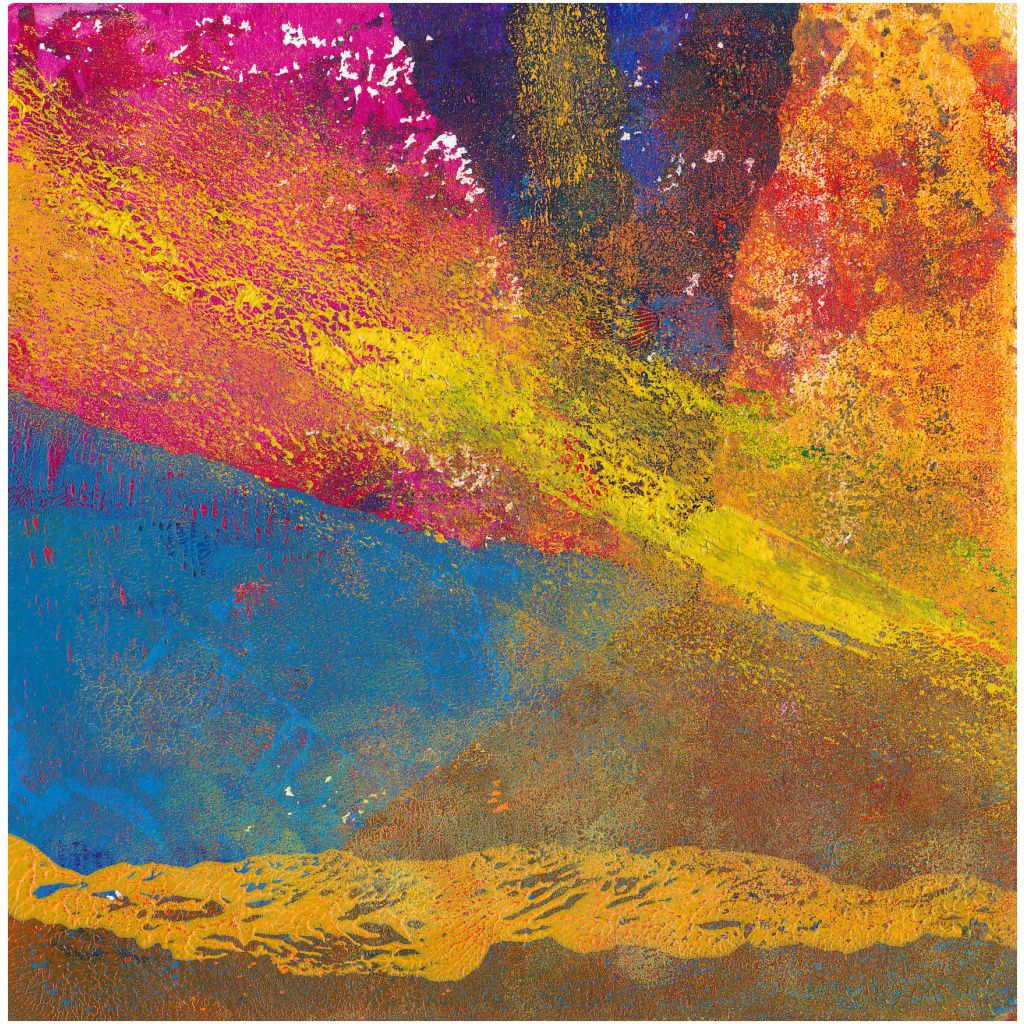
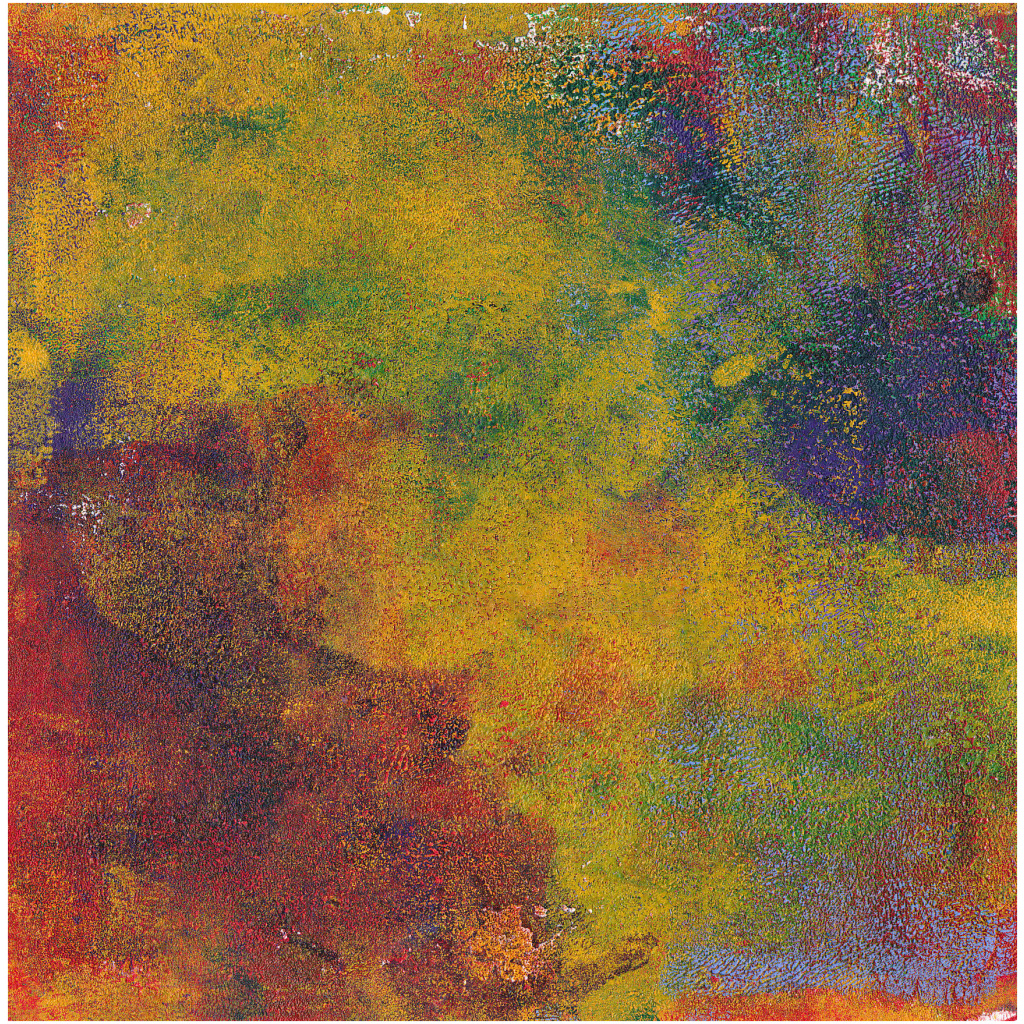
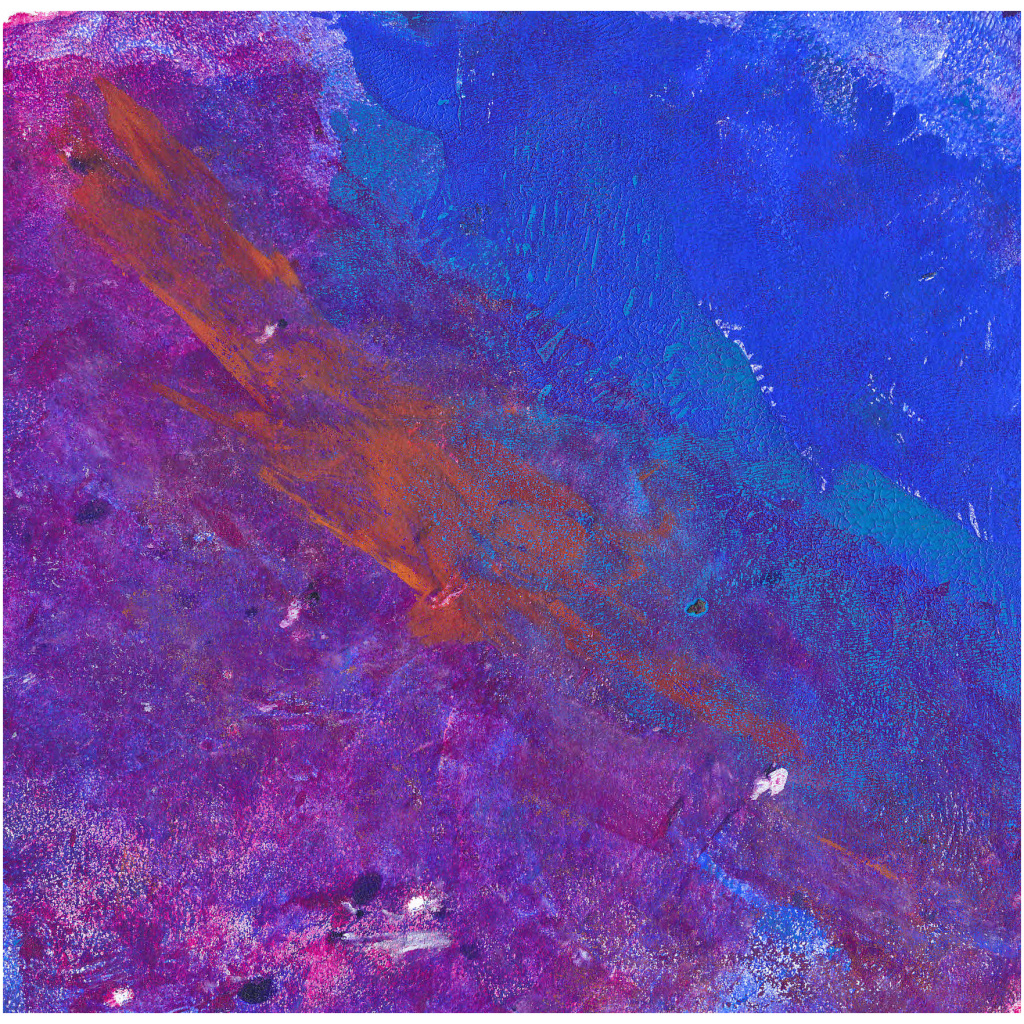
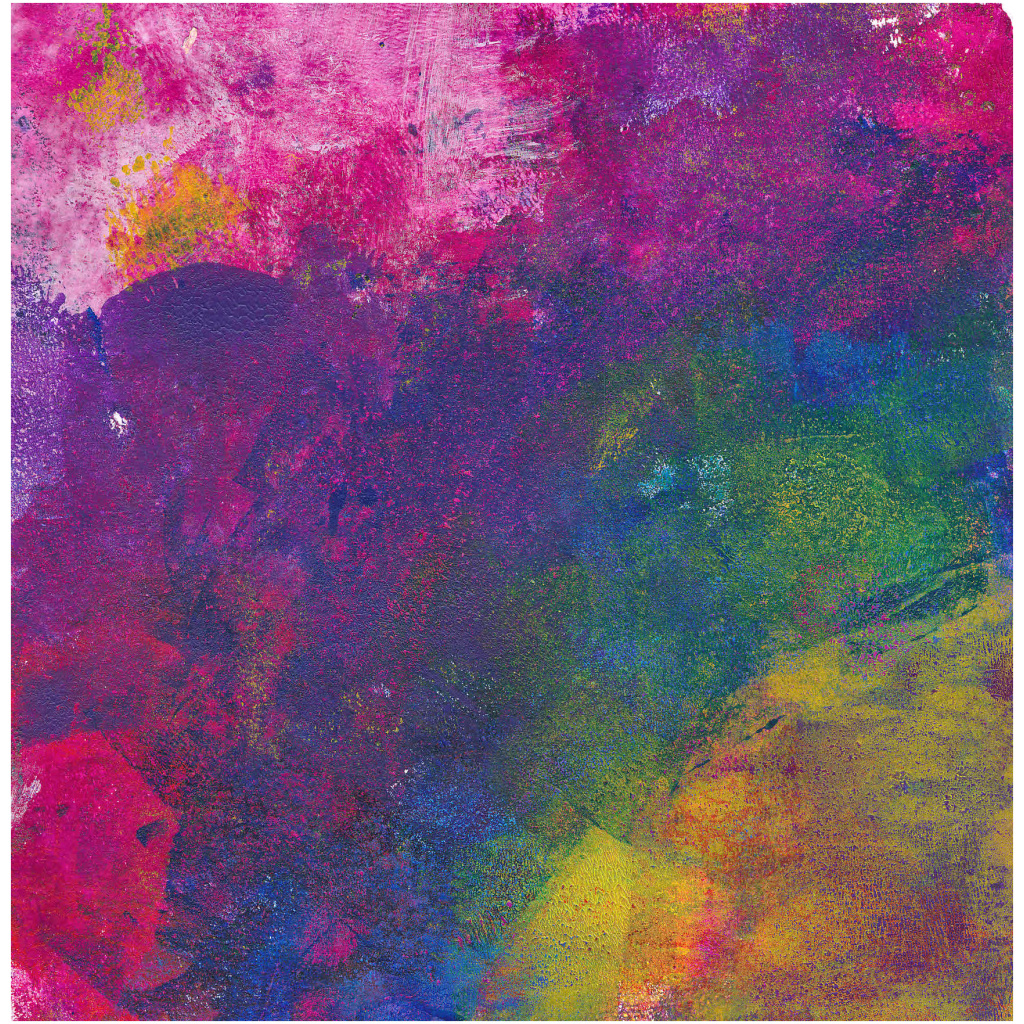
I've been working on some small monotypes over the past few weeks. I started making these as a quick way to try out palettes and different ways of mark-making on the plate, keeping the size down for economy and to save time. I'm increasingly finding however that I like this size - the largest being no more than about 5" by 4" - especially the concentrated focus and the way in which marks have to be kept simple and graphic to show up. Despite that subtlety in shading is still possible.
I haven't put any of these in my shop here. I'm not sure how much interest there would be in what are in effect studies. They have been uploaded to flickr however so have a look and if you think they have worth in themselves, please let me know. I would love some feedback.
I've included some examples below, but the full set, currently eight in number but with another half dozen or so still to scan, can be found here.
Some of the prints still to scan were made while trying to get out of my creative block that I posted about a few days ago. I'll put them into a separate post that will tie into the series of posts on 'appropriation' that I started here.
Pocahotties, Picasso and the Elgin Marbles
Have you come across 'pocahotties'? I hadn’t either until a few weeks ago. It is apparently the term used for young women who dress up in 'Red Indian' outfits in which to prance around on Halloween. I have to confess that until recently, being as happy to watch scantily dressed young women capering around as the next male, I would have seen this as essentially harmless, although it isn’t prevalent in the UK. However, reading the reaction of those on the receiving end made me realise that in practice this is just as offensive as would be putting on blackface and an 'African Princess' outfit. While there are, and probably always have been, people who respect Native American culture and see virtue in emulating it, dressing up for a party is not respect.
Following this up, I came across the term 'cultural appropriation’, defined on Wikipedia as “the taking – from a culture that is not one’s own – of intellectual property, cultural expressions or artefacts, history and ways of knowledge.” It is perhaps best used to describe the broader process of acculturation from the perspective of a minority or weaker culture.
While I understand the 'pocahottie' issue, I have immediate problems with this wider concept. Almost every term used in that definition has further problems of definition. What does ‘taking’ mean? What is a culture? Can we locate the source of ‘intellectual property, cultural expressions or artefacts, history and ways of knowledge’ at a cultural level? Can the appropriation of objects like works of art be considered in the same way as appropriation of content like artistic styles or culturally significant rituals?
Moreover. as the term has passed into wider usage, its meaning has become confused, muddled and riddled with inconsistencies. In particular it has become used to justify claims that the use of concepts from other cultures is in some way unacceptable, to be avoided and perhaps even racist. Dig into blog comment threads and you will arguments to that effect about judo and other martial arts, yoga, textile patterns, music and a huge range of artistic endeavours. Most of these arguments moreover take the ‘donor’ culture at face value, without looking to see how far it is itself a synthesis. The implied suggestion that these cultures cannot stand up for themselves but must be defended by others and, implicitly, fossilised is also at best patronising and potentially racist.
To take this further let’s look at some cases of alleged content appropriation in the arts.
Jazz and blues are generally considered to have their roots in African-American culture. It has been argued in the past that when non African-American musicians attempt to play jazz or blues they are cannot perform with the right sensitivity and feeling and are also damaging the culture from which they are ‘stealing’.
So far as the first argument is concerned there is plenty of contradictory empirical evidence. Many years ago I saw a TV interview with musicians Sonny Terry and Brownie McGee in which they recounted how, when they first heard a recording by the British artist Lonnie Donegan, they thought it was by Leadbelly, so accurately had he captured the sound and feel.
Philosopher James O Young in his book Cultural Appropriation and the Arts" target="_blank" title="Cultural appropriation and the arts">Cultural Appropriation and the Arts recounts how the trumpeter Roy Eldridge (Young calls him ‘Ray’) bet the music critic Leonard Feather that he could reliably tell the difference between jazz performances by African American and non African American musicians. Eldridge failed miserably.
A third example can be found in the almost universal praise for the work of Eric Clapton from black artists like Muddy Waters and B B King.
The second argument about damage to the donor culture also fails to stand up to investigation. The classic 'St James Infirmary Blues' is a case in point. The words and melody have their origin in an 18th century traditional English folk song called "The Unfortunate Rake" (also known as "The Unfortunate Lad" or "The Young Man Cut Down in His Prime"). There are numerous versions of the song throughout the English-speaking world. It evolved for example into other American standards such as "The Streets of Laredo". Effectively the song is the product of a long process of adoption, adaptation and transmutation into the blues we know.
A similar case is the song ‘Goodnight Irene’ recorded in 1950 by Pete Seeger and the Weavers. This was an adaptation of a song called ‘Irene’ by Leadbelly and proved controversial at the time. It turned out however that the Leadbelly song – which he had copyrighted – was based on a traditional Southern folk song he had learned from his uncle. That song was in turn an arrangement of a waltz written in the 1880s by Gussie Lord Davies, an African America composer who wrote however for a largely white audience. Probably Leadbelly’s uncle had come across it via that non African-American channel. Davis of course had in turn appropriated the waltz from the music of Vienna. The song has now permeated British culture to the extent that it has become the club song for supporters of the English football club Bristol Rovers.
In both cases these songs have been passing in and out of African American culture over an extended period. The extent to which they can be placed within a specific culture is minimal and the extent to which any culture has been harmed by the process is probably zero.
Film is another example of appropriation resulting in positive outcomes. The great Japanese filmmaker Akira Kurosawa made numerous films based on Western literary sources. Perhaps the greatest of these are Ran (derived from King Lear) and Throne of Blood (derived from Macbeth). Another of Kurosawa’s films Seven Samurai was in turn remade as The Magnificent Seven, while his film Yojimbo became A Fistful of Dollars.
Shakespeare was himself an arch appropriator, from Holinshed and others. His themes and plots have a mythic quality that stands above any specific culture and so easily slip from one medium to another and from one cultural setting to another. As well as the Kurosawa films, Lear was the inspiration for the film Broken Arrow Lance, the musical Kiss me Kate came from Taming of the Shrew and most well known of all perhaps, West Side Story, from Romeo and Juliet. His work was also the stimulus for the suite “Such Sweet Thunder” by Duke Ellington.
Appropriation of content then has been the source of much great work. The adoption of artistic elements from a culture and their remaking into something new is a positive thing. Examples have been cited from jazz and film, but there are many others. In music, tango, salsa, Tejano, flamenco and high life are all syntheses from a range of cultures. Surprisingly perhaps the Mexican Tejano music includes elements from the brass band music of German immigrants, while flamenco incorporates Arabic and even Indian influences via Gypsy music. None of these examples cited have taken anything away from their culture of origin, in fact by their creation the sum total of human happiness has been increased.
Cultural and artistic change is inevitable. Without it we would still be picking wild berries and fleeing from predators. Trying to prevent change will be as successful as King Cnut. Everyone loses.
I think I have more to say on this, but this post is already rather long.